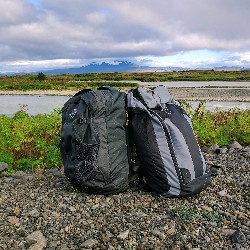
As was becoming the trend, our troop boarded a bus at 0-dark-thirty in order to get to our next destination. Our time in India was spent, and now we were on the way to Nepal by way of Lumbini. The trip itself was long, yet uneventful until we got to the border. We were greeted by hundreds of trucks waiting to cross. These trucks must be registered to cross into Nepal, and may only transit the border on the day they are registered to do so. This leads to a traffic jam that goes back for miles.
Once we did get to the border, we were informed of another odd ritual - we were not allowed to drive across the actual border from India to Nepal! We unloaded off the bus, and after a quick visit to the Indian immigration kiosk, loaded our baggage onto a cart and walked it across the border into Nepal. Once there, we paid the visa fee to enter Nepal ($25/person, only payable in USD), and loaded on another bus to take us into Lumbini. This is known as the birthplace of Siddhartha Gautama, the OG Buddha and founder of Buddhism.
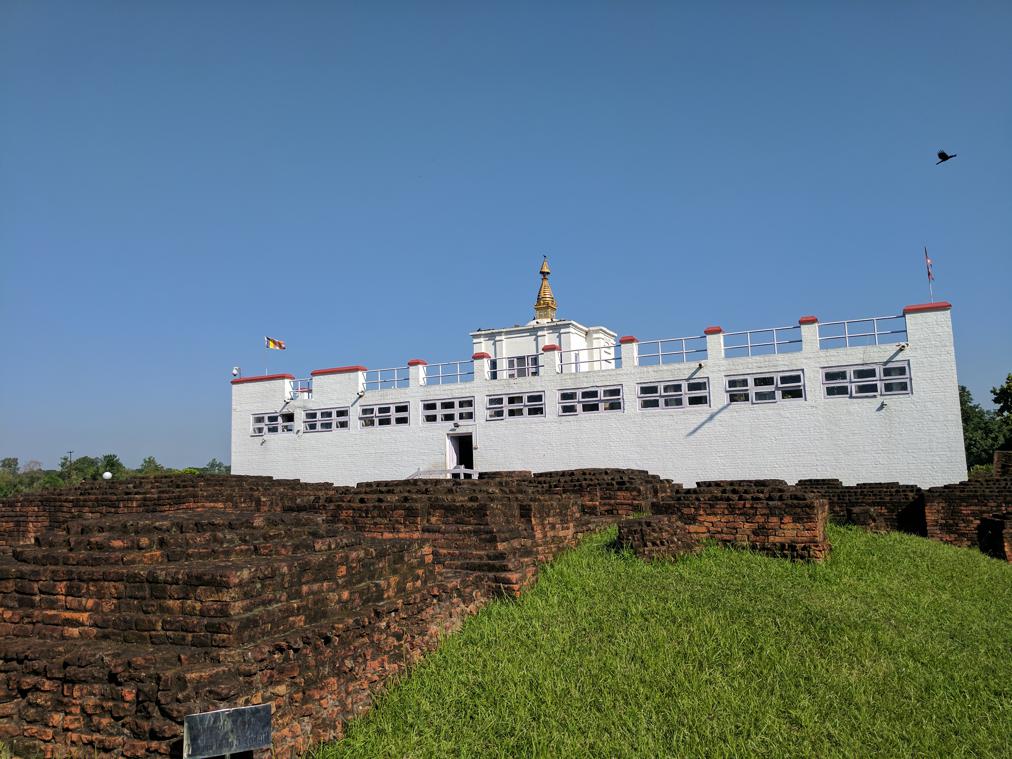 A monument over the spot where Gautama is said to have been born. No pictures allowed inside, unfortunately.
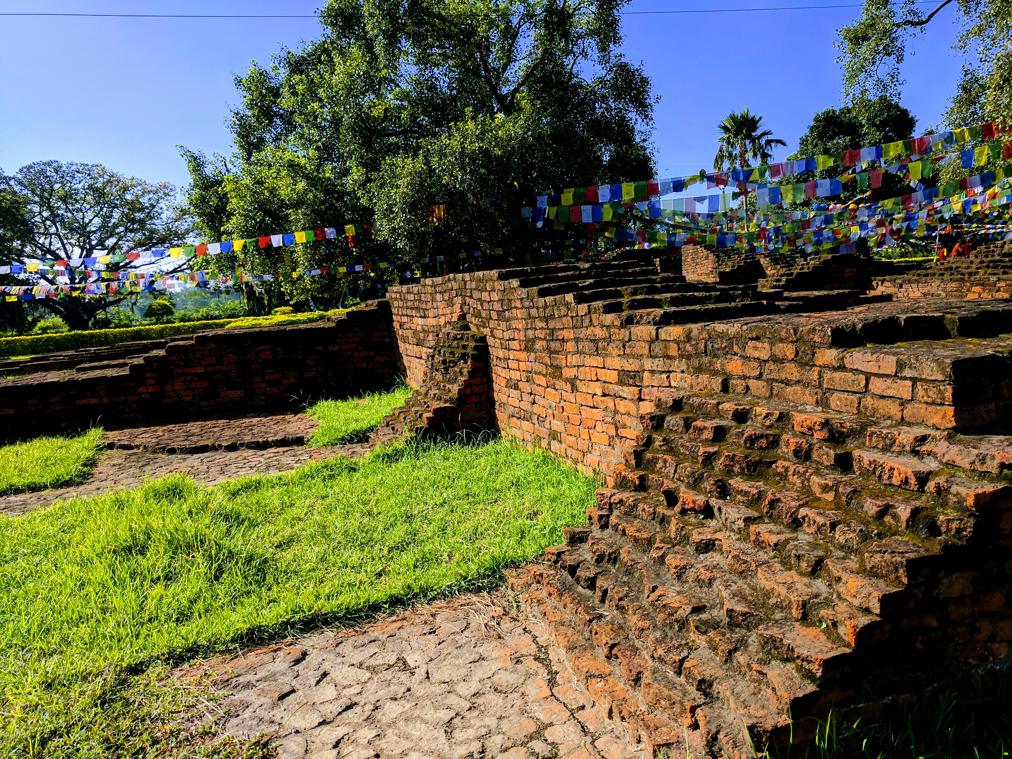 View of the gardens and the ruins.
The gardens where Gautama is said to have been born are still intact, as are the ruins of the temple. Despite the large number of pilgrims, the gardens are quite serene. The sounds of group prayer, and the rustling of prayer flags add to the mystic feel of the site.
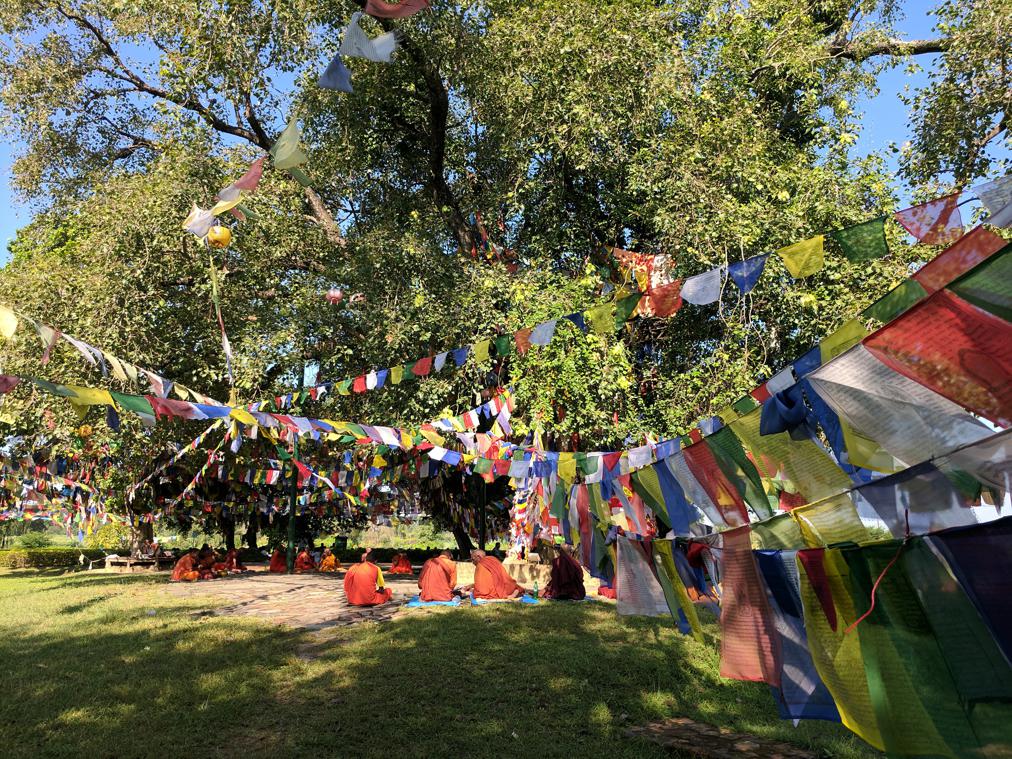 Prayer flags and holy men, rustling and praying, respectively.
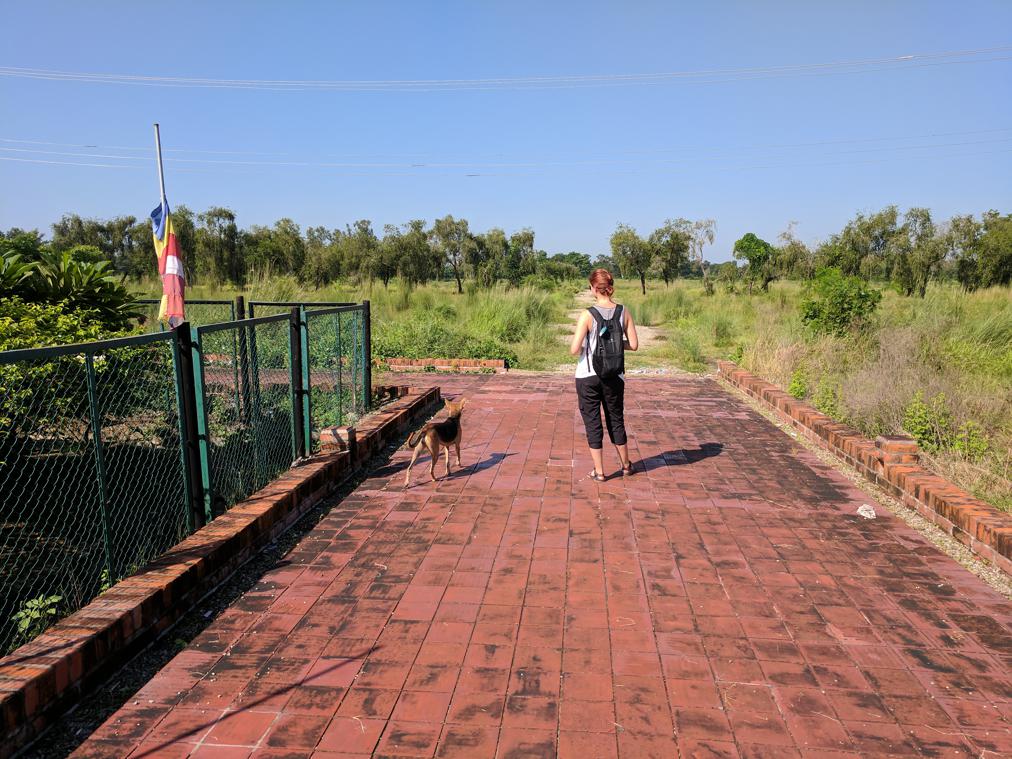 Dana and a new canine friend contemplate their places in the universe. And possibly food.
After our visit to the temple, it was time to pack up and head to our next destination, Chitwan National Park. On the way, we stopped at a roadside family restaurant, and sampled some Nepalese Thali, and took in the view from the mountains. What we saw was a mere sample of the totally different world which was Nepal!
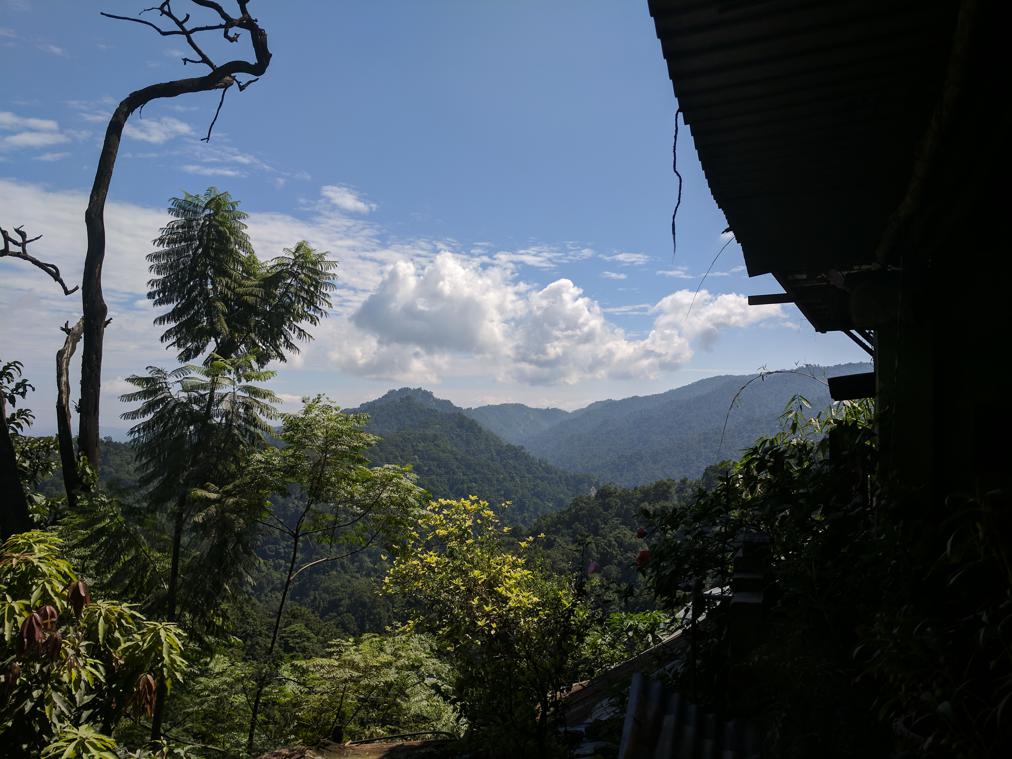 A view from the mountain restaurant.
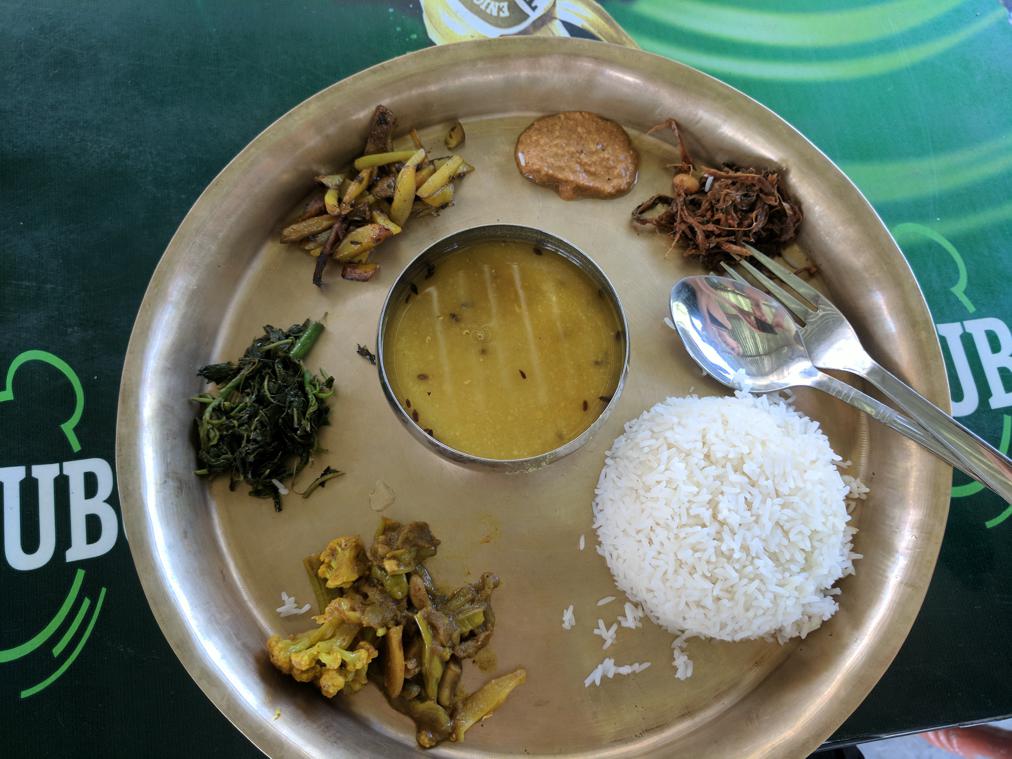 Our first Nepalese Thali, which is a kind of sampler dish of different foods. The centerpiece is Dal bhat. The lentils are ground to a paste in this dish, as opposed to eaten intact.